
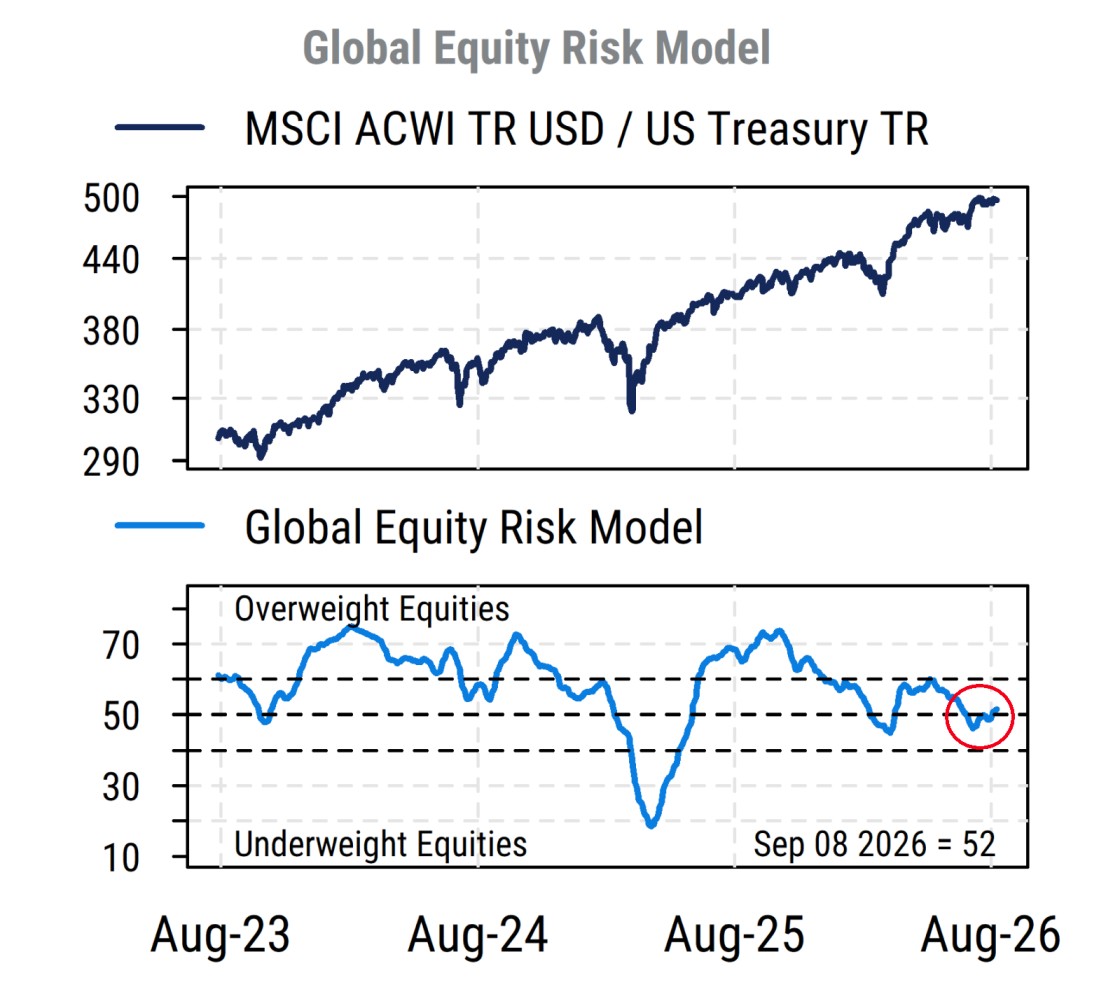
A key question from clients that we have addressed recently is: earnings and analyst estimates have rarely been stronger, even in regions less exposed to the AI boom than the US (Europe, Japan), so why have equities shown less enthusiasm lately, keeping our Equity Risk Model no better than neutral? A few flies in the ointment worth watching.
According to Factset’s aggregation of analyst bottom-up company estimates, the MSCI ACWI index EPS are projected to grow 32% in 2026 (a huge amount for a broad index), then 15% in 2027 and 13% in 2028. And sales growth of 10.5% this year is projected, followed by 7.8% in each of the next two years.
Our earnings estimate revisions metrics remain very positive globally (meaning more analysts are raising their next-12-month earnings forecasts than are lowering them), and are almost never this strong outside of a recovery from a recession: late-cycle earnings surges like this are very rare. Earnings reports for Q2 were very strong in most regions, with Europe and Japan seeing improving revisions breadth and catching up with or exceeding the continued strong readings in the US. Emerging Markets (esp. China) and Australia are the laggards regionally.
Equity market activity has been mixed recently, however, with slow summer trading and a lack of big positive catalysts to look forward to. Bond yields have risen as policy rates may be going higher due to persistent inflation, global trade remains a concern (tariffs, China), and the wars in Ukraine and the Middle East are still going.
So our Global Equity Risk Model remains no better than neutral despite the extraordinary earnings backdrop. This partly reflects concerns about how sustainable the earnings growth is, as well as the early warning signs of easing risk appetite. We thus keep a balanced view on equities versus bonds, as well as on styles and sectors.
Source: Mill Street Research
Our work shows early signs of potentially peaking risk appetite, which seems to align with growing debate about the sustainability of the very strong reported earnings growth and analyst expectations lately. The AI-related capex currently helping boost earnings globally likely cannot continue at this pace over the longer-term, and macro policy may become less supportive.
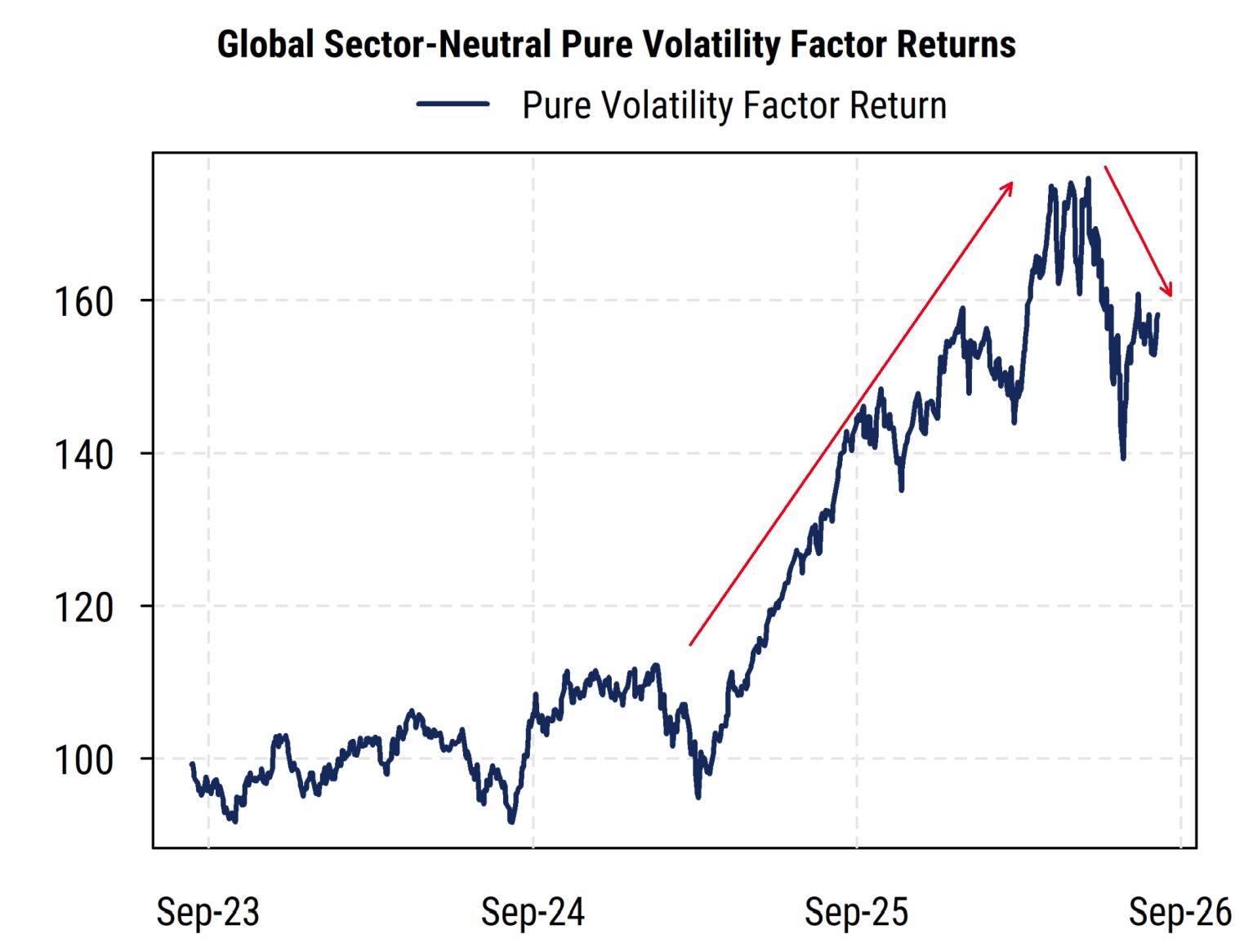
Our factor analysis shows that the global sector-neutral pure volatility factor peaked this summer after a huge run, and looks like it may be making a top (chart below). The factor return reflects the hypothetical return to a global long-short (market neutral) portfolio that is long high-volatility stocks and short low-volatility stocks while also being sector-neutral and minimizing exposure to other factors (such as size, profitability, valuation, etc.).
This aligns with our Equity Risk Model readings, and tells us to maintain some restraint in risk exposure despite the bullish-sounding earnings headlines.
Source: Mill Street Research
Investors watching factors besides just earnings
So why have stocks struggled over the last month to continue rising (aside from lots of people on vacation in August)? Why is our Equity Risk Model barely holding on to even neutral readings? A few risks seem to be garnering more attention in investors’ minds:
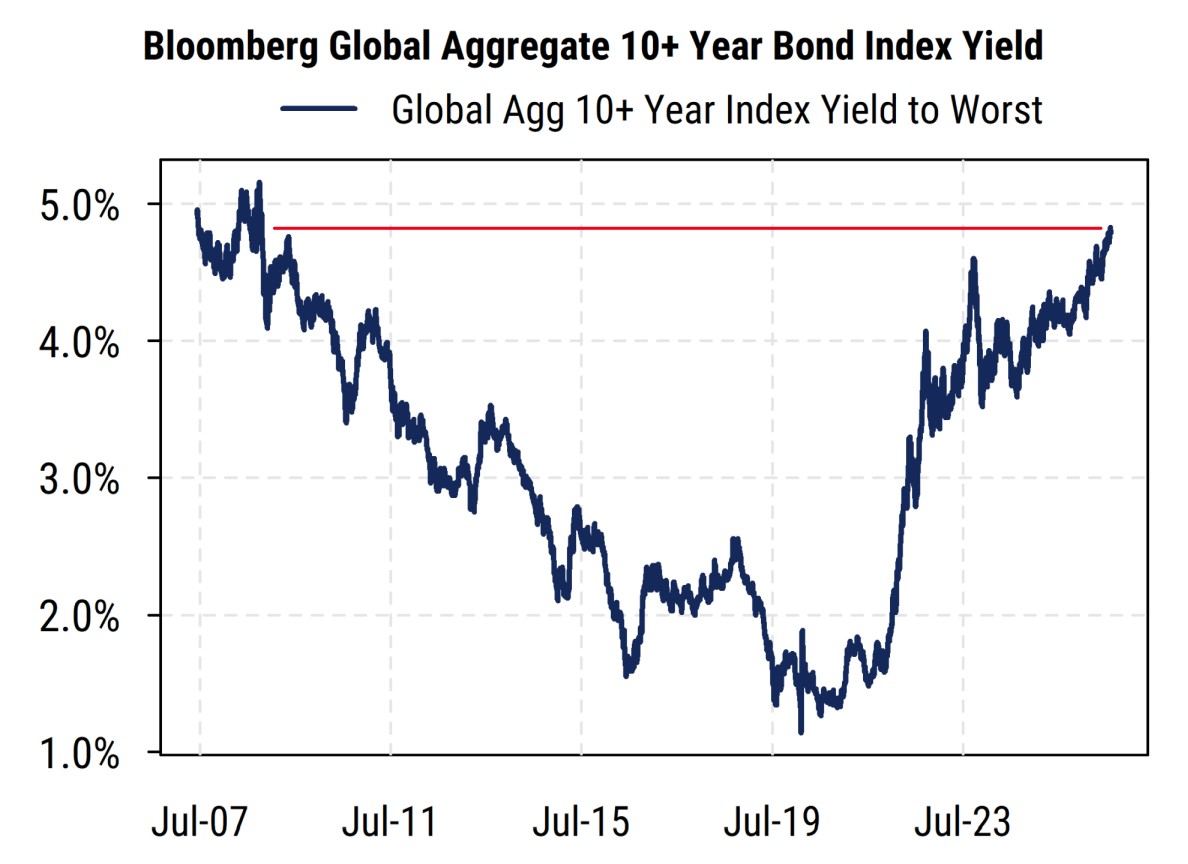
1) Bond yields keep rising. Inflation remains elevated globally, and even when removing the effects of food and energy, is above target. The Bloomberg global aggregate 10+ year bond index yield is at its highest level since 2008. While AI-related stocks can potentially ignore this, the rest of the market may not be able to.
Source: Mill Street Research, Bloomberg
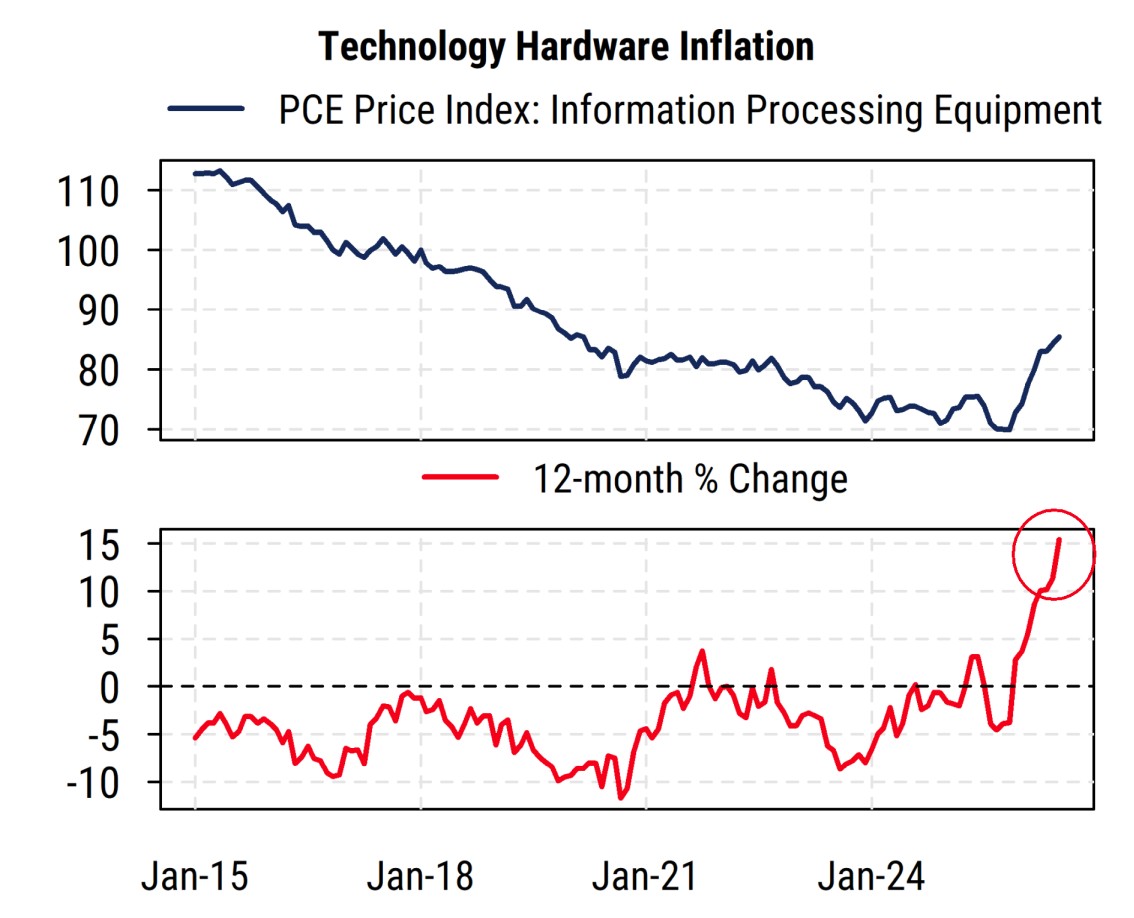
2) The AI boom is causing huge inflation in technology hardware, which almost never happens. The PCE price index for information processing equipment is rising at an unheard-of 15% rate. For most of the time in the last 30 years, quality-adjusted prices for technology equipment have steadily fallen. This drastic reversal is forcing a renewed focus on the costs to both consumers and Tech firms associated with the AI capex surge and the correspondingly large return on investment (ROI) required to justify it.
Source: Mill Street Research, US Bureau of Economic Analysis
3) While the costs of building AI infrastructure have surged and public opposition to data centers has increased, the economics of LLMs remain uncertain. One measure of pricing power for LLM usage (the average price paid for one million tokens to use in an LLM, as calculated by Silicon Data) has been plunging and hitting new lows recently, implying a price war going on even while aggregate usage is increasing. Competition (esp. from China) is increasing and costs are rising in AI, so the capex driving much of the current profit boom may be wobblier than it looks.
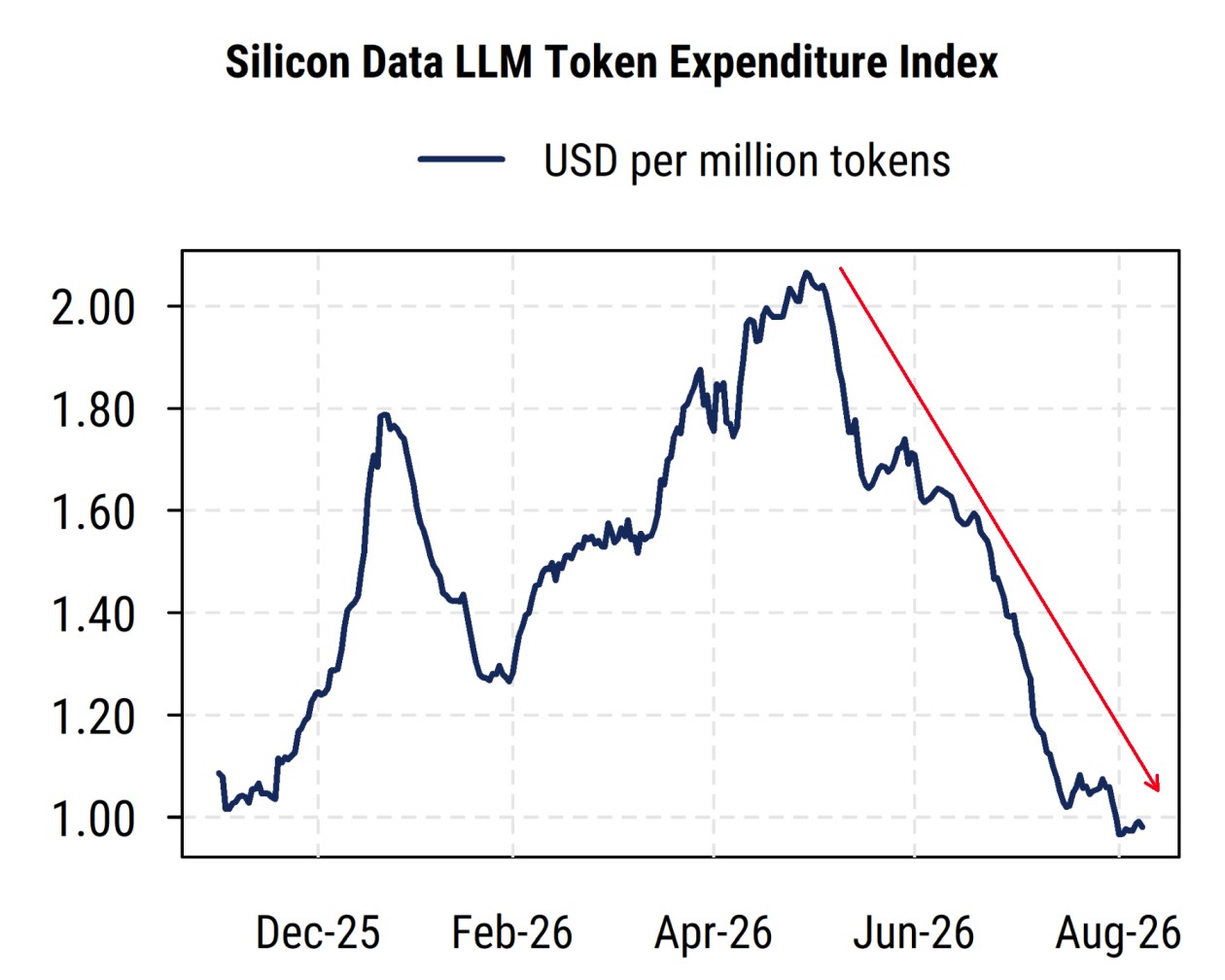
Source: Mill Street Research, Silicon Data, Bloomberg
With these and other factors in mind, we are still overweight Technology but have scaled back exposure recently (adding to areas like Financials), and remain neutral on equities in our asset allocation. And inflation and policy concerns keep us favoring short duration over long duration within fixed income.
Sam Burns, CFA
Chief Strategist
Mill Street Research